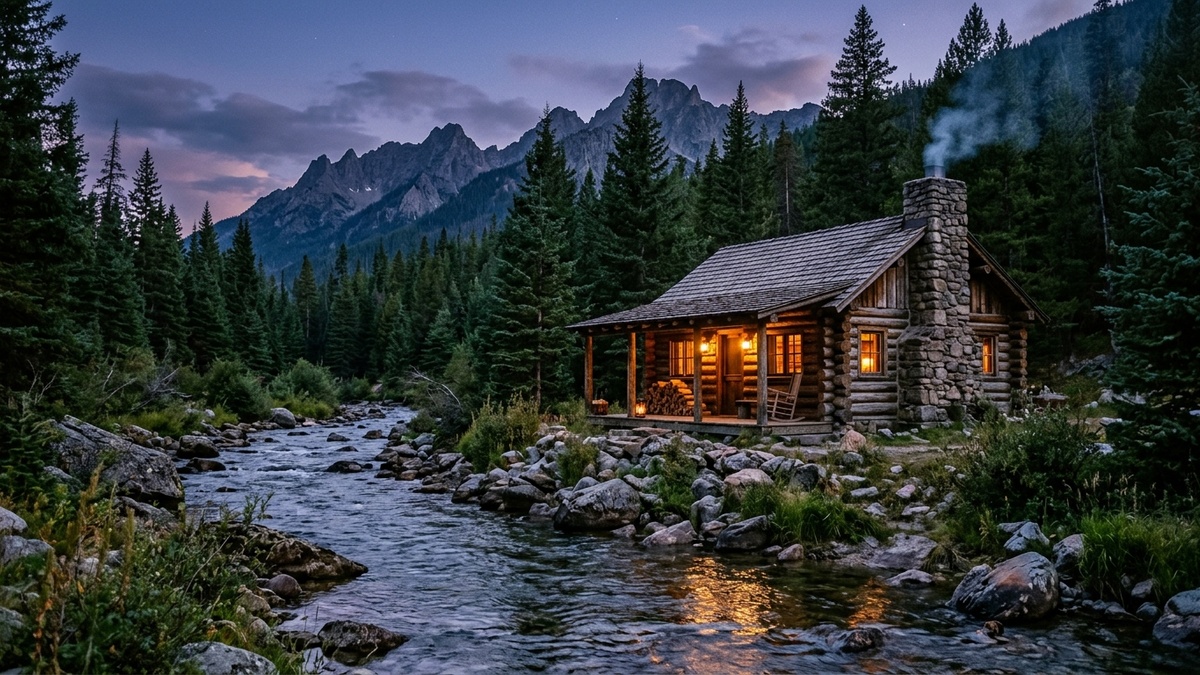
Wes Teague left his sister a dead hay meadow, a dry ditch, and a neighbor who wanted the whole place for less than the price of a good pickup.
"I'm sorry about Wes," Royce Holt said. He stood in the yard with his hat in his hands and his truck running behind him. "I truly am. But you need to know what you've got here, Mrs. Teague. That spring went dry two summers ago. No water, no hay. No hay, no ranch."
Marian looked past him at the place she had grown up. The barn roof sagged in the middle like an old horse. The hay meadow below the house was brown and gray, the color of a paper sack. The ditch that used to run silver through it every June was full of tumbleweeds.
"Make me an offer in writing," she said. "I'll think about it."
"It's good till Friday," Holt said. "After that, I'll have to talk to the state about that water right. Water you don't use, you can lose."
Marian was sixty-eight. She had taught fourth grade in Cheyenne for thirty-four years. She had not set foot on the Teague place outside Sweetwater Junction, Wyoming, since she was thirty-eight, when she and Wes stood on either side of their father's grave and said things they could never take back.
Their father had left the ranch to Wes. He had left Marian his old pocket watch and a letter that said she was too smart to waste on cows. Wes had read that letter as a compliment to her. Marian had read it as a door closing. Neither of them called for thirty years.
Then, in September, a lawyer in Rawlins called to say Wes was gone, and that he had left her everything.
She spent Wednesday walking the place.
The house was clean but tired. Wes had lived alone at the end, and it showed in small ways. One coffee cup in the drainer. One chair pulled out at the table. A row of pill bottles on the windowsill that she put in a paper sack without reading.
In the barn, Wes's canvas coat hung on its nail by the tack room door. Marian put her hand on it, the way you might touch a sleeping person's shoulder. Something crackled in the pocket.
It was a feed store receipt, folded in half. On the back, in her brother's square print, it said:
Mare. Count the willows. W.
Wes was the only person who had ever called her Mare, and he had stopped when she was eighteen.
She stood in the barn a long time with the receipt in her hand.
Then she folded it into her own coat pocket, went to the house, and made a pot of coffee in her brother's old percolator, the way their mother used to. She drank it standing at the window, looking down at the dead meadow, trying to work out what Wes had wanted her to count, and why.
When Marian was nine, her father had put a shovel in her hands and taught her to irrigate the hay meadow.
The Teague spring came out of the hill a mile above the house, in a draw full of chokecherry and willow. Her grandfather had dug the ditch from the spring to the meadow with a team and a Fresno scraper in 1919. Every June, her father opened the wooden headgate at the spring, and the water came down the ditch, and Marian walked behind it with her shovel, moving the canvas dams so the water would spread across the meadow evenly.
She learned two things that summer that she never forgot. Water runs downhill. And willows grow wherever water goes.
"You want to know where the water's been," her father told her, "don't look at the ditch. Look at the willows. Willows don't lie."
Thursday morning, she took Wes's binoculars and walked up the ditch.
The ditch was dry. That much Holt had right. But the willows along it told her more. Near the house, they were dead, gray sticks. Halfway up, they were half alive. And in the last quarter mile below the spring, they were green and thick, with yellow leaves still hanging on in November.
Willows that green had been drinking this year. Not two summers ago. This year.
She kept walking.
Where the old ditch turned toward the meadow, she stopped and looked through the binoculars. A new line of willows ran away from the old ditch, off to the east. They were young, no taller than her shoulder. They ran straight as a fence line, along the side of the hill, toward the boundary fence and Royce Holt's land beyond it.
Somebody had moved the water.
The spring was a quarter mile farther up the draw.
Her grandfather's wooden headgate was still there, gray and split, sitting in dry mud. But a few yards above it, someone had dug down to the spring and set a new steel box in the ground. A black plastic pipe ran out of the box and disappeared under fresh dirt, heading east. She could hear water running inside it.
Marian knelt and put her hand on the steel. It was cold and wet, and it hummed.
Then she heard a horse blow behind her.
Royce Holt sat on a big sorrel at the top of the draw, looking down at her. He had a rifle in the scabbard under his knee, the way most ranchers did that time of year, and a face she could not read at all.
"Mrs. Teague," he said, quiet as the water under her hand. "You've wandered a long way from the house. Come on back down to my side of the fence."